FRANK Talks: liberty
Showing posts with label liberty. Show all posts

Wednesday, January 11, 2017

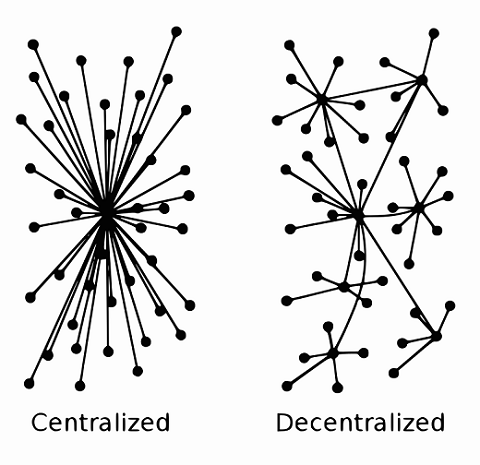
Decentralization


“Wait, why is centralized government a bad thing?” my friend asked me.

I was a little shocked by the question. Especially since we had been through many of the same leadership courses, so I expected him to know the answer. I can't remember how I responded, but the fact is that centralized power is micro-managing. That is why decentralization and delegation are essential to leadership, especially in government.

The Danger

Think about what your job would be like if you had to get your bosses approval for every decision you made. Your place of business would collapse if it operated like that. The same goes for the whole economy. The more regulation and micro-managing we get from our leaders, the more the economy will slow down, until it collapses on itself.

The Rule

“Every problem should be handled by the smallest level of government possible.” This is the principle that my mentor taught me four years ago. Last night, I got to visit him and talk about politics (our favorite topic). Sure enough this principle came up again, and we spent a good amount of time talking about it.

In today's political arena, it seems that the exact opposite happens. When someone has a problem, too often they want the federal government to fix it. However, there are more immediate institutions that can solve the problem. Even private institutions. This wastes time and resources for the federal government, and cheapens the smaller levels of government.

What are the levels?

The Tenth Amendment states “The powers not delegated to the United States by the Constitution, nor prohibited by it to the States, are reserved to the States respectively, or to the people.”

So right here we are looking at three levels of government. First there is the federal government, which is established by the Constitution. Second is the state government. Finally there is the people. There are many other levels not mentioned here, like county and town governments, but the people have the greatest degree of power. Each individual is a sovereign entity, responsible for himself and his possessions.

Some individuals are part of a family unit. While the family isn't an official level of government, it is nonetheless an essential component of civilization. Families and individuals ban together to form towns/communities, which ought to be the strongest form of official government. The farther up the levels of government you go, the weaker and less involved they should be.

Our nation used to operate like this. So much so, that the federal government wasn't even thought about by most people. Instead, today we need to spend a lot of time and energy on federal politics, because all the power is concentrated there.

Solving a Problem


When you have a problem, the first level of government that you ought to turn to is yourself. Can you solve the problem yourself? Self-sufficiency is important for both a free society and for personal growth. If you cannot solve the problem yourself, turn to your family, or some similar small support group. If your family cannot solve the problem, then move to your local government, and from there you can move up the levels of government if necessary. 

Decentralizing helps you to keep as much freedom as possible, and prevents higher levels of government from being over-burdened with too many responsibilities.

Wednesday, December 14, 2016

Limited Government


Conservatives are about conserving the principles which maximize liberty. Many, even some conservatives, have characterized conservatism as being for "small government". However, this is not technically true. A small government can still do a great deal of undue damage.

Instead conservatives promote the idea of limited government. If the government is limited from violating your negative rights, then the government will indeed be small. Here in America, our government is founded on a document called the Constitution. The Constitution is one of the things that makes America unique. It marks the first time that a nation was founded on laws, rather on a supposed divine right of kings.

The Constitution was founded on a philosophy called Liberalism, and we conservatives love the Constitution. We seek to interpret it strictly (or conservatively) because we know that it will lead to greater freedom for everyone. If people interpret it loosely (liberally), or simply rewrite it to suit their own views, we will have tyranny from those who are interpreting. It's a scenario like the pigs in Animal Farm, who rewrote the laws while the other animals were sleeping.

The Constitution is our contract with our government. We give them the power to protect our rights and dispense justice, in return they are bound not to violate our rights. This is why it is so important to understand that our rights are negative. If the government violates the contract, it has nullified it's legitimacy. Our Founders took this very seriously, even saying that the people should overthrow the government in such an event.

The Referee

The government is supposed to be a referee, and the Constitution is a handbook of all the things that the referee should not do. The referee should not interfere with the game. The referee cannot pick favorites. The referee cannot give free throws to a team, just because he feels like it. It can only give free-throws when one team is fouled by the other team.

My Observations

I am no expert on the Constitution, but I have had the honor of studying under many experts who love our nation and want to preserve the freedoms that our Constitution brings. Earlier this year, I read through the entire US Constitution, and I would recommend it for anyone who hasn't. Even if you are not conservative. You might not understand all of it, but try to grasp as much as you can. I am now reading further materials to help me better understand the original document and it's underlying philosophy. While I am no expert, allow me to share a few of my observations on this great document.

  1. The articles and amendments in the Constitution restrict the government, not the people. You would think that the law of the land would have articles talking about activities that are restricted for citizens. To my memory, there are none, save the Prohibition Amendment, which is also the only amendment that has been repealed.

  1. The articles and amendments protect the negative rights of the people. I have put this series in this order for a reason. I spent a whole blog explaining “negative rights” and how your only true right is the right to be left alone. All of the rights that the Constitution protects are negative rights, and they are all protected against the government.

  1. The Tenth Amendment delegates all other powers to the States and to the people. This observation segues nicely into my next blog in this series. A government ought to be decentralized as much as possible. Decentralization is the best way to limit the government.

Wednesday, October 12, 2016

Negative Rights

What is a right? 

There are two theories that seek to describe what a right is: positive rights and negative rights. A positive right requires action on the part of someone else. For instance, someone must pay for your health-care or education, or provide that service for free. Negative rights require inaction, to be left alone. Your right to life is your right to not be murdered. Your right to property is your right to not be robbed. Your right to free speech is your ability to speak your mind without being stopped.

These two theories are mutually exclusive. Your rights cannot be both positive and negative. To give an example, if you have a positive right to health-care, you are infringing on the property rights of some poor sucker who will need to pay for your health-care. Another alternative is to force the doctor to provide you with health-care, which is a violation of his liberty. There is no way to do this without infringing on someone's negative rights.

The theory of negative rights is a foundational tenet of conservatism. Conservatives believe that it costs nothing to be a decent person. Simply live and let live.

What Are Your Rights

There are many negative rights outlined in the Declaration and Constitution. First, however, we must point out that these documents do NOT grant you these rights. Neither does the government. These rights are inalienable, they rightfully belong to everyone. These document's indicate that these rights are given to us by a Creator. Our government is simply set up by us to protect these negative rights.

The first and most important right is your right to life: the right to not be murdered. Without the right to life, all other rights are meaningless. Next is your right to liberty: your right to not be enslaved, or forced to do something against your will. Then you have you right to pursue happiness. The statement found only in the Declaration of Independence speaks of eudaimonia, the pursuit of human flourishing.

(Jefferson considered property rights to be under this umbrella as well. The Fifth Amendment protects your right to private property, as well as your right to life and liberty.)

All of the rights found in the Constitution are examples of negative rights, which the government exists to protect. With negative rights, your freedom is only limited by the rights of others. You have the freedom to do virtually anything, as long as you don't violate the rights of others. That's called liberty

Promoting Liberty

So how do we promote liberty? By protecting the negative rights of all citizens. By force if we must. The institution of government is established as a referee to protect negative rights of it's citizens, and severely punish those who violate the rights of others. Sometimes by having their rights proportionally violated. It may seem contradictory to use force to promote liberty. However, it is imperative that negative rights be protected, in order to uphold civilization.

If we want to  maintain a society where every citizen has maximum freedom, then each of us has certain responsibilities that we must fulfill.

Wednesday, August 31, 2016

6 Essentials of Conservative-liberalism

There are six concepts that I feel are essential to conservatism. These aren't just “my six conservative principles”, instead these are the six principles that I propose are essential to conservatism. I have written them in a way that builds one on top of the other. Let me know if you can see how they are all connected.


Individualism is the idea that all humans are equal. We are equal in essence, and therefore equal in rights, and therefore equal before the law. We are all one people, not to be divided by religion, political party, ethnicity, gender, or any such thing. Yet, each of us is a unique individual. We each have similarities and differences that we can find with each human being on Earth.


Negative rights are rights that only require inaction on the part of others. Your right to life, requires that others NOT kill you. Your right to free speech requires that others NOT stop you from talking (although you can't force them to listen, either). Negative rights boils down to your right to be left alone. This is in stark contrast with positive rights, which are entitlements to free stuff. Negative rights must be protected in order to maintain civilization, and those who violate negative rights must be punished (usually by having their rights proportionally violated).


When we protect everyone's negative rights, we create a society with the purest form of liberty, but in order to maintain this pure liberty, we must have virtue, which can be defined as moral excellence. Someone who pursues moral excellence (virtue) can be expected to give liberty to his fellow-man. In fact liberty can be considered the most basic form of virtue.

He can also be expected to pursue the highest good for himself and others. He will seek mutually-beneficial trades, that will lift up both himself and his fellow-man. He will give to the poor, without government coercion. He will stay away from substances and activities which harm himself and those around him.

A perfectly moral population would need no government, but no one is perfectly moral. However, the more moral a population, the smaller government that they will require. This concept is the often unspoken core of conservatism. If we want greater liberty, we need to promote the highest virtue, in the greatest number of people. Virtue cannot be brought by force, from the top down, except for severely punishing those who violate negative rights. Instead virtue must be taught from the ground up.


The government is an institution, set up by the people, to protect the negative rights of their citizens. The job of the government is to recognize different rights, create laws to protect those rights, and punish those who break the law. In America, we have a contract with our government called the Constitution. Our government promises to protect certain negative rights, and we promise not to overthrow them. At least that's supposed to be the idea.


Our Constitution limits the government's power, and the Tenth Amendment delegates all other powers, not mentioned, to the states or to the people. This protects us from centralizing power, which leads to more micro-managing from bureaucrats in the capitol. An effective government delegates power as much as possible. The federal government delegates power to the states, states to counties, cities, and towns, and from there to private institutions, families, and individuals.


Free enterprise is based off of two negative rights: your right to your own property and your right to control how you use your property. When these rights are truly carried out, we create a free enterprise, and wealth is generated. Not money, but wealth. Wealth is generated primarily when there is a mutually-beneficial exchange. When both parties in a trade win, they walk away wealthier than they were before. This doesn't eliminate poverty, as we can never eliminate poverty. However, it can alleviate the severity of poverty.

So What Do You Think?

Please share this post if you liked it. Also, tell me what you think. Tweet at me @frank_perseo or comment on the Frank Talks Facebook page. Did I miss any essential concepts in conservatism? Do you disagree with any of the ones I presented? If so, please tell me why. I am curious to know.

Wednesday, August 3, 2016

Am I a Libertarian?

Well, that depends on how you define "libertarian". I can already hear the collective groan among my audience. Especially those who know me personally, and my propensity to be a word-nerd. Nonetheless, it truly does depend on how you define the word. I want to give some of my thoughts on libertarianism.

On this blog, I have defended the philosophy of conservatism. I like what conservative icon Ronald Reagan said of libertarianism "I believe the very heart and soul of conservatism is libertarianism". The cental concept of libertarianism is liberty: hence the name. Liberty is the freedom to do what you want, so long as you don't infringe on the rights of others. I love liberty, and I believe that we need to conserve certain principles in order to maintain our liberty.

Libertarians are a broad and diverse group. They have a wide array of views on different issues, because they believe in freedom of thought. Because of their diversity, it is so difficult to find a group on unifying beliefs among them. Should abortion be legal? Should we have a police force? What about a justice system? What about a military? Should we have our own party, or should we join with the two major parties? I was inspired to write this blog by this video, which talks about 6 different kinds of libertarians.

Personally, I simplify them down to two categories: modern and classical libertarians. I do this for simplicity's sake, and it helps me to better determine if a self-proclaimed libertarian is an ally. For me there are two factors which separate the two groups. Firstly, do you believe that there is a legitimate function of the institution of government? Second, do you believe that personal virtue is important among citizens to maintain liberty?

If you answer yes to both questions, I would classify you as more of a classical libertarian, and an ally. If you answer no to both question, you are a mordern libertarian, and we have some serious disagreements. (This does not necessarily mean that we can't be allies.)

Our founders are what I would consider classical libertarians. They believed that in order to maintain liberty, you need an appointed institution to dispense justice. Many of them were Christians, and believed that this institution was ordained by God, but could be kept in check by people.

They wrote the Constitution as a contract to limit the government, thereby maximizing the freedom of the citizens. Your freedom only ceases at the rights of others. Personally, I think that the idea of this contract is that if they keep up their end of the bargain, we the people will keep our end. If they break the contract, then we should rise up and replace them.

Our founders also believed in personal virtue, and self-sacrifice. Sometimes we give up the things that we want right now, in order to better ourselves and the community. Self-interest is fine, but self-sacrifice is also noble. It brings about human flourishing (the pursuit of happiness). Virtue is about caring for others. Why would you care whether or not you violate someone else's rights, if you don't care about them? Or if you don't fear the consequences. If everyone was virtuous, if they cared about their fellow-man, we wouldn't need to worry about them violating each other's rights.

It is in the best interest of liberty, and small government, to more people who are as virtuous as possible.

In Summary

Libertarians are those who believe in liberty. Some believe that this is best acheived by throwing off all government, and no longer imposing any standard of virtue. I believe that teaching citizens to be as virtuous as possible* and by maintaining and small and limited government, we can have the purest form of liberty anywhere in the world.

This limited government is given to us in the Constitution. We must maintain a conservative interpretation of the government, to keep those in power from overstepping their bounds. This is why I am a conservative, and I believe conservatism is best for libertarianism.


“If you analyze it I believe the very heart and soul of conservatism is libertarianism. I think conservatism is really a misnomer just as liberalism is a misnomer for the liberals — if we were back in the days of the Revolution, so-called conservatives today would be the Liberals and the liberals would be the Tories. The basis of conservatism is a desire for less government interference or less centralized authority or more individual freedom and this is a pretty general description also of what libertarianism is.”― Ronald Reagan


*Personally I advocate Christianity and Christian ethics as the most virtuous way to live.

Wednesday, March 23, 2016

6 Conservative Principles

(Or the six principles which conservatives seek to conserve)

I want to continue with a theme that I started with at the beginning of the year: what does it mean to be a conservative. Now even among conservatives, there are many definitions for conservatism, but the the broadest definition that I can come up is that conservatism* is about conserving the ideas and principles which preserve our liberty. Conservatism is not about maintaining outdated traditions or some status quo.


*This is conservatism in American politics.


What are these principles which preserve our liberty? Well, I want to take a look at that. I have come up with at least 6 principles which conservatives seek to maintain.


  1. Truth- conservatives unique attitude towards the Truth, and the method for finding it.
  2. Natural Law- the system of ethics that our legal system is founded on.
  3. Human rights- part of Natural Law, we believe that all humans are born with certain rights
  4. Liberty- the purest form of freedom
  5. Justice- we cannot maintain liberty without justice
  6. Checks and balances- Our country has an intricate system of checks and balances that must be maintained.


Now most people who identify as conservatives are pragmatists. That is to say, they believe (at least some if not all) conservative policies work to create a society with greater liberty and prosperity for all. However, historically, and today in a growing movement, conservatism is becoming more and more about following a conservative interpretation of the Constitution.


Truth
Ok, everyone is going to make the claim that their position in the truth. I am of, course doing no different here. However, even beyond that, conservatives have an entirely different view of the truth. I would argue that conservatives and progressives have an entirely different ways of dealing with unpleasant ideas.


Conservatives generally have a pragmatic view of truth. That is to say that they seek what works best to create liberty and prosperity.


Natural law
Conservatives hold that morality is not relative. We also hold that there are some ethical laws, which are universally applicable, no matter what religion or culture you come from. We believe that certain moral truths are self-evident, and can be known intuitively. Whether you believe that it comes from a God-given conscience, or from your sub-conscious (System 1 thinking). The people can then elect representatives to pass legislation, to reflect the conscience of the people.


Human rights
In political philosophy, there are two theories on the meaning of rights: positive rights and negative rights. They are misnamed in my opinion, because negative rights are not a negative thing. Positive rights means that the government (and by extension society) must give you something, like free healthcare or education. Negative rights means that the government (and society) will not prevent you from doing something, like speaking freely.


I will dive into this more in a future post, but conservatives take the negative rights approach. Why? Because negative rights do not harm anyone, and they don't cost anyone time or money. It shouldn't cost anything to be a decent person. If you want to help someone out, you are free to do that, but no one should force you to do so. That would take away the joy of helping: doing it willingly.


Conservatives recognize many of these negative rights. Among them are the rights to life, liberty, and the pursuit of happiness. That "pursuit of happiness" is an old-fashioned term, I like to redefine it as the pursuit of anything material or immaterial that leads to human flourishing. If you want to make money, you are free to do that. If you want to spend money on health care or education, you are free to do that. If you want to give money to charities so that the less fortunate can afford things, awesome!


Liberty
Liberty is not the freedom to do whatever you want. Did your parents ever tell you that? It's true. First off, you do not have the freedom to trample on some else's rights. If you do that, then we no longer have freedom for everyone, but instead tyranny from the strongest. So we all must agree not to infringe on the rights of others.


Second, on a personal level, you should use your liberty to do good instead of evil. The government cannot make you a moral person. It can only pass laws and try to enforce them. However, if you personally are using your freedom to do things that are less-than-good you are wasting your freedom. Also, if you are using your freedom to do something that is addictive or dangerous, you risk throwing away your life or your liberty. Now, liberty is about letting people make their own choices, but I will always promote liberty coupled with personal responsibility.


Justice
You cannot have liberty and a civil society without justice. Without justice, there is no repercussions for those who trample on the rights of others. Without laws and a system to enforce them, criminals will simply bully the week. Conservatives believe that the role of mediating and dispensing justice belongs to the government (at least when individuals can't resolve it peacefully).


This is one of the main differences between conservatives and those like "liberal-tarian", voluntarians, and anarchists. Those ideologies tend to believe that government is inherently immoral, because it uses force. Conservatives understand that we need the institution of government to protect the rights of the weak from those who would trample them by force.


Checks and balances
Conservatives believe in a system of checks and balances. Our Constitution sets up such a system between different entities, namely the three branches of government. While the Constitution does not say the words "separation of church and state" (go ahead, look it up), it does guarantee that "Congress shall make no law respecting an establishment of religion,".


Now before you get too excited, the sentence finishes out "or prohibiting the free exercise thereof". Now I am talking about religion in the broadest sense: any philosophical and ethical system and practices. You have the right to exercise your beliefs, so long as you don't infringe on the rights of others. You also have the right to exercise, by using your moral code as a guide in your voting.


We believe in the tenth amendment that delegates all other powers to the states and to the people, rather than having a federal government which micromanages everything. However, during the 1800s, conservative Republican Party was founded to abolish slavery, because we believed that states rights do not trump human rights.


Finally, we have a democratic-republic rather than a pure democracy. This is an important distinction to make, conservatives don't believe in a simple "majority-rule". Why not? Because if we have majority-rule, then it sucks to be in the minority. This leads to the sort of mob-rule which allowed for slavery, segregation, and Nazism. Just because the majority says something doesn't make it right. Do you remember your parents asking you "if all your friends jumped off a cliff, would you go too?"

These are my 6 principles, which define conservatism. Different people may define it different ways, but I am arguing that these are the ones which are essential to conservatism. What do you think? Does this change how you see conservatives?