FRANK Talks: conservatism
Showing posts with label conservatism. Show all posts

Wednesday, January 11, 2017

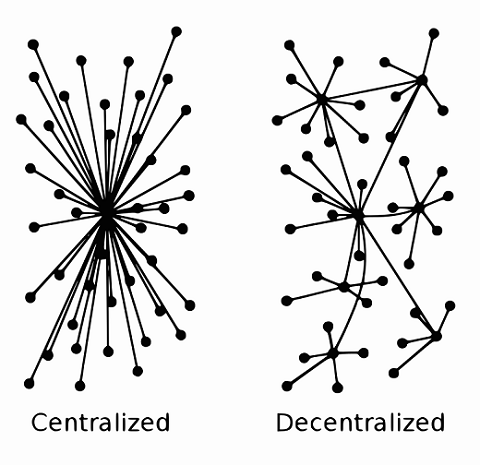
Decentralization


“Wait, why is centralized government a bad thing?” my friend asked me.

I was a little shocked by the question. Especially since we had been through many of the same leadership courses, so I expected him to know the answer. I can't remember how I responded, but the fact is that centralized power is micro-managing. That is why decentralization and delegation are essential to leadership, especially in government.

The Danger

Think about what your job would be like if you had to get your bosses approval for every decision you made. Your place of business would collapse if it operated like that. The same goes for the whole economy. The more regulation and micro-managing we get from our leaders, the more the economy will slow down, until it collapses on itself.

The Rule

“Every problem should be handled by the smallest level of government possible.” This is the principle that my mentor taught me four years ago. Last night, I got to visit him and talk about politics (our favorite topic). Sure enough this principle came up again, and we spent a good amount of time talking about it.

In today's political arena, it seems that the exact opposite happens. When someone has a problem, too often they want the federal government to fix it. However, there are more immediate institutions that can solve the problem. Even private institutions. This wastes time and resources for the federal government, and cheapens the smaller levels of government.

What are the levels?

The Tenth Amendment states “The powers not delegated to the United States by the Constitution, nor prohibited by it to the States, are reserved to the States respectively, or to the people.”

So right here we are looking at three levels of government. First there is the federal government, which is established by the Constitution. Second is the state government. Finally there is the people. There are many other levels not mentioned here, like county and town governments, but the people have the greatest degree of power. Each individual is a sovereign entity, responsible for himself and his possessions.

Some individuals are part of a family unit. While the family isn't an official level of government, it is nonetheless an essential component of civilization. Families and individuals ban together to form towns/communities, which ought to be the strongest form of official government. The farther up the levels of government you go, the weaker and less involved they should be.

Our nation used to operate like this. So much so, that the federal government wasn't even thought about by most people. Instead, today we need to spend a lot of time and energy on federal politics, because all the power is concentrated there.

Solving a Problem


When you have a problem, the first level of government that you ought to turn to is yourself. Can you solve the problem yourself? Self-sufficiency is important for both a free society and for personal growth. If you cannot solve the problem yourself, turn to your family, or some similar small support group. If your family cannot solve the problem, then move to your local government, and from there you can move up the levels of government if necessary. 

Decentralizing helps you to keep as much freedom as possible, and prevents higher levels of government from being over-burdened with too many responsibilities.

Wednesday, December 14, 2016

Limited Government


Conservatives are about conserving the principles which maximize liberty. Many, even some conservatives, have characterized conservatism as being for "small government". However, this is not technically true. A small government can still do a great deal of undue damage.

Instead conservatives promote the idea of limited government. If the government is limited from violating your negative rights, then the government will indeed be small. Here in America, our government is founded on a document called the Constitution. The Constitution is one of the things that makes America unique. It marks the first time that a nation was founded on laws, rather on a supposed divine right of kings.

The Constitution was founded on a philosophy called Liberalism, and we conservatives love the Constitution. We seek to interpret it strictly (or conservatively) because we know that it will lead to greater freedom for everyone. If people interpret it loosely (liberally), or simply rewrite it to suit their own views, we will have tyranny from those who are interpreting. It's a scenario like the pigs in Animal Farm, who rewrote the laws while the other animals were sleeping.

The Constitution is our contract with our government. We give them the power to protect our rights and dispense justice, in return they are bound not to violate our rights. This is why it is so important to understand that our rights are negative. If the government violates the contract, it has nullified it's legitimacy. Our Founders took this very seriously, even saying that the people should overthrow the government in such an event.

The Referee

The government is supposed to be a referee, and the Constitution is a handbook of all the things that the referee should not do. The referee should not interfere with the game. The referee cannot pick favorites. The referee cannot give free throws to a team, just because he feels like it. It can only give free-throws when one team is fouled by the other team.

My Observations

I am no expert on the Constitution, but I have had the honor of studying under many experts who love our nation and want to preserve the freedoms that our Constitution brings. Earlier this year, I read through the entire US Constitution, and I would recommend it for anyone who hasn't. Even if you are not conservative. You might not understand all of it, but try to grasp as much as you can. I am now reading further materials to help me better understand the original document and it's underlying philosophy. While I am no expert, allow me to share a few of my observations on this great document.

  1. The articles and amendments in the Constitution restrict the government, not the people. You would think that the law of the land would have articles talking about activities that are restricted for citizens. To my memory, there are none, save the Prohibition Amendment, which is also the only amendment that has been repealed.

  1. The articles and amendments protect the negative rights of the people. I have put this series in this order for a reason. I spent a whole blog explaining “negative rights” and how your only true right is the right to be left alone. All of the rights that the Constitution protects are negative rights, and they are all protected against the government.

  1. The Tenth Amendment delegates all other powers to the States and to the people. This observation segues nicely into my next blog in this series. A government ought to be decentralized as much as possible. Decentralization is the best way to limit the government.

Wednesday, November 2, 2016

Virtue

Virtue is essential to a free and prosperous society. In order to have a society of pure liberty, we must protect the three basic negative rights: life, liberty, and property. If we want to maintain such a society, everyone has responsibilities.

Responsibilities

Firstly, you are responsible for not violating your neighbors rights. You must have the self-control to govern yourself in such a way that the government won't need to interfere in your life. Second, you have a responsibility to help your neighbors in need. Don't give the government cause to step in and use force to help the needy (like income redistribution). This only gives the government more power.

You also have a responsibility to vote and be involved in politics. Campaigning, writing to your Congressman, attending school board meetings. We have a responsibility to nominate and elect good leaders, and see to it that the laws we pass are good. We have a responsibility to serve on a jury, so we can ensure that our fellow-man gets justice. I am always so disappointed to hear friends try to weasel out of jury duty. If we want to maintain our free society, we all have responsibilities to fulfill.

Each individual has the responsibility to be virtuous, especially in their public life.

Virtue

So what is virtue? Virtue can be defined as “moral excellence”. A perfectly moral population would need no government to regulate them, but there are no perfectly moral people. (At least not here on Earth.) Still, it stands that the more virtuous the people are, the less government they need.

Virtue is living the best life that one can possibly conceive. Living virtuously is living in accordance with the Truth. Here at FRANK talks, I write about and defend the Christian worldview. I believe in the Christian worldview, and I maintain that everyone ought to believe it because it is True. If I happen to be wrong, then you ought to follow whatever is the Truth. (And if there is no such thing as Absolute Truth, then I'm not sure why I even bother communicating with you guys.)

You must ask yourself a few questions. Is God real? Is Christianity the True Religion? Is the Bible Authoritative? And if not/so how should I live my life? This is why two of my main themes in this blog are apologetics and holistic life. First, I want to help others be certain that Biblical Christianity is true beyond a reasonable doubt. Then I want to help them live the best life they can in all areas (Spiritual, Intellectual, Physical, Occupational, Social, Financial, and more).

How to Promote Virtue

Virtue cannot be forced. It cannot come from the top-down. This would not be virtue. Instead it must come from the “bottom-up”. The decision to act virtuously must come from the individual. Each person must seek the Truth, and the best way to live. Some will make mistakes, but they should be given the freedom to do so.

So how do we promote virtue in our society on a national level. As I said, it comes from the bottom up. Learning about virtue starts at home. Morals cannot be taught dispassionately from a textbook or a lecture. Our moral judgments are made in the emotional part of our brain. That is why morals should be taught to us by people we love and trust. This is why conservatives see the family unit as the essential building block to a free and prosperous society. Extended communities like churches help with this process of moral education.

What the Government Can Do

There are two things that the government can do to promote virtue. First, it is imperative that all levels of government protect the negative rights of their citizens. The government must punish those who violate (or maybe even threaten) the negative rights of others, and they must do so severely.

The second thing to do is to decentralize. The Tenth Amendment of the US Constitution delegates all unspecified power to the states. The states ought to delegate power to the counties, and counties to the towns. However, the real power lies in the private individuals and institutions. Each level of government, and each institution, has the right to set their own standards. 

Each individual has the freedom to move to any town, work for the company, or join the denomination whose standards he agrees with. If the standards are good, they will create prosperity when followed. The government must not enact policies which disrupt the fostering of virtue. Policies which inadvertently cause families to fall apart is most disheartening to conservatives.

Benefits of Virtue

The purpose of government is not to provide for people, but to protect their citizens' negative rights. It is then the people's responsibility to provide for themselves, and for those in need. This is why I believe that virtue is so essential to a free society. We need virtuous people who are willing to give to those in need. It also takes virtuous leaders to limit their own powers, or to accept limits on their powers, so that you can experience your God given freedom to it's fullest potential.

Please share this post if you liked it. Also, tell me what you think. Tweet at me @frank_perseo or comment on the Frank Talks Facebook page. Do you agree that virtue is essential to a free and prosperous society? What should we the people be doing (not under government compulsion) to make our nation better?

Wednesday, October 12, 2016

Negative Rights

What is a right? 

There are two theories that seek to describe what a right is: positive rights and negative rights. A positive right requires action on the part of someone else. For instance, someone must pay for your health-care or education, or provide that service for free. Negative rights require inaction, to be left alone. Your right to life is your right to not be murdered. Your right to property is your right to not be robbed. Your right to free speech is your ability to speak your mind without being stopped.

These two theories are mutually exclusive. Your rights cannot be both positive and negative. To give an example, if you have a positive right to health-care, you are infringing on the property rights of some poor sucker who will need to pay for your health-care. Another alternative is to force the doctor to provide you with health-care, which is a violation of his liberty. There is no way to do this without infringing on someone's negative rights.

The theory of negative rights is a foundational tenet of conservatism. Conservatives believe that it costs nothing to be a decent person. Simply live and let live.

What Are Your Rights

There are many negative rights outlined in the Declaration and Constitution. First, however, we must point out that these documents do NOT grant you these rights. Neither does the government. These rights are inalienable, they rightfully belong to everyone. These document's indicate that these rights are given to us by a Creator. Our government is simply set up by us to protect these negative rights.

The first and most important right is your right to life: the right to not be murdered. Without the right to life, all other rights are meaningless. Next is your right to liberty: your right to not be enslaved, or forced to do something against your will. Then you have you right to pursue happiness. The statement found only in the Declaration of Independence speaks of eudaimonia, the pursuit of human flourishing.

(Jefferson considered property rights to be under this umbrella as well. The Fifth Amendment protects your right to private property, as well as your right to life and liberty.)

All of the rights found in the Constitution are examples of negative rights, which the government exists to protect. With negative rights, your freedom is only limited by the rights of others. You have the freedom to do virtually anything, as long as you don't violate the rights of others. That's called liberty

Promoting Liberty

So how do we promote liberty? By protecting the negative rights of all citizens. By force if we must. The institution of government is established as a referee to protect negative rights of it's citizens, and severely punish those who violate the rights of others. Sometimes by having their rights proportionally violated. It may seem contradictory to use force to promote liberty. However, it is imperative that negative rights be protected, in order to uphold civilization.

If we want to  maintain a society where every citizen has maximum freedom, then each of us has certain responsibilities that we must fulfill.

Wednesday, September 14, 2016

Individualism

The foundation of conservative political philosophy is the idea of individualism. Simply put, individualism favors the freedom individuals over collective or state control. Individualism says that the rights and freedoms of the individual are more important than the goals of the collective. The rights of the individual cannot be sacrificed for the sake of the collective.

When I hear others talk about individualism, I often feel that the philosophy is misunderstood. In fact, I myself used to be confused about this core conservative idea. Many seem to confuse individualism with isolationism. They believe that individualists are sad and lonely people, who are anti-community. However, individualists are not anti-community. A community is of great benefit to all the individuals involved. Individualism only means that your rights are not to be violated by the community or by another individual.

All Equal

The greatest summation of the concept of individualism can be found in the Declaration of Independence. “We hold these Truths to be self-evident, that all men are created equal...”. Before you point out that this excludes women, I will point out that in this case “men” is supposed to be gender-neutral here. All humans are equal. Every gender, ethnicity, sexual orientation, religion; criminals and upstanding citizens; every age, including the unborn.

We are equal in many ways. First off, we are all equal in essence. Philosophers debate the essential nature of humanity, but we all intuitively know what makes a human. Second, we are equal in rights. The aforementioned statement of the Declaration goes on to list just a few of our basic rights to “life, liberty, and the pursuit of happiness”. I will describe more about what rights are in the next post.

We all have equal rights, and my rights do not take precedence over your rights. If you violate my rights, you have opened yourself up for reciprocation. Finally, because we all have equal rights, we are all equal before the law. That means, in court, I should have the same shot at justice as a rich person or a person of a different ethnicity.

Collectivism

Individualism stands opposed to the philosophy of collectivism. Collectivism says that the goals of the collective are more important that the rights of the individual. Collectivism has led to many atrocities throughout human history. Consider slavery, and how the slaves right to liberty was violated by the collective of slavery supporters, who felt the institution was necessary for their economy.

The Nazis also declared that whole groups of people didn't possess the right to life. Racism is always a form of collectivism, because it sees people in terms of groups (“races”), instead of as individuals. Finally, communism denies citizens the right to private property, in the name of benefiting the collective.

Illustration: Civil War

One of the greatest illustrations of individualism versus collectivism can be found in Captain America: Civil War. The story is written to highlight the differences between the two philosophies. Captain America beautifully embodies individualism. He believes signing the Sokovia Accords is a violation of his right to follow his conscience. He is not a lone-wolf isolationist, but instead teams up with other heroes (Team Cap) who believe as he does.


Team Iron-Man is very much on-the-nose with spelling out how evil collectivism is. Even Black Widow says at one point [paraphrased] “How we stay together is not as important as the fact that we stay together.” Think about the implications of that statement. Team Iron-Man must bully others into getting their way, all in the name of “safety”. In the end, Cap says that the core of what he believes in is individuals... which is the essence of individualism, conservatism, and America.

Wednesday, August 31, 2016

6 Essentials of Conservative-liberalism

There are six concepts that I feel are essential to conservatism. These aren't just “my six conservative principles”, instead these are the six principles that I propose are essential to conservatism. I have written them in a way that builds one on top of the other. Let me know if you can see how they are all connected.


Individualism is the idea that all humans are equal. We are equal in essence, and therefore equal in rights, and therefore equal before the law. We are all one people, not to be divided by religion, political party, ethnicity, gender, or any such thing. Yet, each of us is a unique individual. We each have similarities and differences that we can find with each human being on Earth.


Negative rights are rights that only require inaction on the part of others. Your right to life, requires that others NOT kill you. Your right to free speech requires that others NOT stop you from talking (although you can't force them to listen, either). Negative rights boils down to your right to be left alone. This is in stark contrast with positive rights, which are entitlements to free stuff. Negative rights must be protected in order to maintain civilization, and those who violate negative rights must be punished (usually by having their rights proportionally violated).


When we protect everyone's negative rights, we create a society with the purest form of liberty, but in order to maintain this pure liberty, we must have virtue, which can be defined as moral excellence. Someone who pursues moral excellence (virtue) can be expected to give liberty to his fellow-man. In fact liberty can be considered the most basic form of virtue.

He can also be expected to pursue the highest good for himself and others. He will seek mutually-beneficial trades, that will lift up both himself and his fellow-man. He will give to the poor, without government coercion. He will stay away from substances and activities which harm himself and those around him.

A perfectly moral population would need no government, but no one is perfectly moral. However, the more moral a population, the smaller government that they will require. This concept is the often unspoken core of conservatism. If we want greater liberty, we need to promote the highest virtue, in the greatest number of people. Virtue cannot be brought by force, from the top down, except for severely punishing those who violate negative rights. Instead virtue must be taught from the ground up.


The government is an institution, set up by the people, to protect the negative rights of their citizens. The job of the government is to recognize different rights, create laws to protect those rights, and punish those who break the law. In America, we have a contract with our government called the Constitution. Our government promises to protect certain negative rights, and we promise not to overthrow them. At least that's supposed to be the idea.


Our Constitution limits the government's power, and the Tenth Amendment delegates all other powers, not mentioned, to the states or to the people. This protects us from centralizing power, which leads to more micro-managing from bureaucrats in the capitol. An effective government delegates power as much as possible. The federal government delegates power to the states, states to counties, cities, and towns, and from there to private institutions, families, and individuals.


Free enterprise is based off of two negative rights: your right to your own property and your right to control how you use your property. When these rights are truly carried out, we create a free enterprise, and wealth is generated. Not money, but wealth. Wealth is generated primarily when there is a mutually-beneficial exchange. When both parties in a trade win, they walk away wealthier than they were before. This doesn't eliminate poverty, as we can never eliminate poverty. However, it can alleviate the severity of poverty.

So What Do You Think?

Please share this post if you liked it. Also, tell me what you think. Tweet at me @frank_perseo or comment on the Frank Talks Facebook page. Did I miss any essential concepts in conservatism? Do you disagree with any of the ones I presented? If so, please tell me why. I am curious to know.

Wednesday, August 3, 2016

Am I a Libertarian?

Well, that depends on how you define "libertarian". I can already hear the collective groan among my audience. Especially those who know me personally, and my propensity to be a word-nerd. Nonetheless, it truly does depend on how you define the word. I want to give some of my thoughts on libertarianism.

On this blog, I have defended the philosophy of conservatism. I like what conservative icon Ronald Reagan said of libertarianism "I believe the very heart and soul of conservatism is libertarianism". The cental concept of libertarianism is liberty: hence the name. Liberty is the freedom to do what you want, so long as you don't infringe on the rights of others. I love liberty, and I believe that we need to conserve certain principles in order to maintain our liberty.

Libertarians are a broad and diverse group. They have a wide array of views on different issues, because they believe in freedom of thought. Because of their diversity, it is so difficult to find a group on unifying beliefs among them. Should abortion be legal? Should we have a police force? What about a justice system? What about a military? Should we have our own party, or should we join with the two major parties? I was inspired to write this blog by this video, which talks about 6 different kinds of libertarians.

Personally, I simplify them down to two categories: modern and classical libertarians. I do this for simplicity's sake, and it helps me to better determine if a self-proclaimed libertarian is an ally. For me there are two factors which separate the two groups. Firstly, do you believe that there is a legitimate function of the institution of government? Second, do you believe that personal virtue is important among citizens to maintain liberty?

If you answer yes to both questions, I would classify you as more of a classical libertarian, and an ally. If you answer no to both question, you are a mordern libertarian, and we have some serious disagreements. (This does not necessarily mean that we can't be allies.)

Our founders are what I would consider classical libertarians. They believed that in order to maintain liberty, you need an appointed institution to dispense justice. Many of them were Christians, and believed that this institution was ordained by God, but could be kept in check by people.

They wrote the Constitution as a contract to limit the government, thereby maximizing the freedom of the citizens. Your freedom only ceases at the rights of others. Personally, I think that the idea of this contract is that if they keep up their end of the bargain, we the people will keep our end. If they break the contract, then we should rise up and replace them.

Our founders also believed in personal virtue, and self-sacrifice. Sometimes we give up the things that we want right now, in order to better ourselves and the community. Self-interest is fine, but self-sacrifice is also noble. It brings about human flourishing (the pursuit of happiness). Virtue is about caring for others. Why would you care whether or not you violate someone else's rights, if you don't care about them? Or if you don't fear the consequences. If everyone was virtuous, if they cared about their fellow-man, we wouldn't need to worry about them violating each other's rights.

It is in the best interest of liberty, and small government, to more people who are as virtuous as possible.

In Summary

Libertarians are those who believe in liberty. Some believe that this is best acheived by throwing off all government, and no longer imposing any standard of virtue. I believe that teaching citizens to be as virtuous as possible* and by maintaining and small and limited government, we can have the purest form of liberty anywhere in the world.

This limited government is given to us in the Constitution. We must maintain a conservative interpretation of the government, to keep those in power from overstepping their bounds. This is why I am a conservative, and I believe conservatism is best for libertarianism.


“If you analyze it I believe the very heart and soul of conservatism is libertarianism. I think conservatism is really a misnomer just as liberalism is a misnomer for the liberals — if we were back in the days of the Revolution, so-called conservatives today would be the Liberals and the liberals would be the Tories. The basis of conservatism is a desire for less government interference or less centralized authority or more individual freedom and this is a pretty general description also of what libertarianism is.”― Ronald Reagan


*Personally I advocate Christianity and Christian ethics as the most virtuous way to live.