FRANK Talks: limited government
Showing posts with label limited government. Show all posts

Wednesday, January 11, 2017

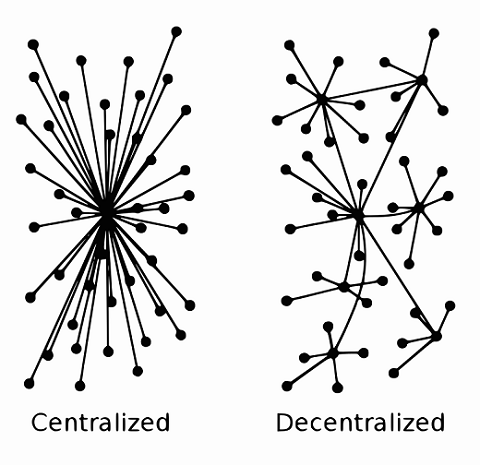
Decentralization


“Wait, why is centralized government a bad thing?” my friend asked me.

I was a little shocked by the question. Especially since we had been through many of the same leadership courses, so I expected him to know the answer. I can't remember how I responded, but the fact is that centralized power is micro-managing. That is why decentralization and delegation are essential to leadership, especially in government.

The Danger

Think about what your job would be like if you had to get your bosses approval for every decision you made. Your place of business would collapse if it operated like that. The same goes for the whole economy. The more regulation and micro-managing we get from our leaders, the more the economy will slow down, until it collapses on itself.

The Rule

“Every problem should be handled by the smallest level of government possible.” This is the principle that my mentor taught me four years ago. Last night, I got to visit him and talk about politics (our favorite topic). Sure enough this principle came up again, and we spent a good amount of time talking about it.

In today's political arena, it seems that the exact opposite happens. When someone has a problem, too often they want the federal government to fix it. However, there are more immediate institutions that can solve the problem. Even private institutions. This wastes time and resources for the federal government, and cheapens the smaller levels of government.

What are the levels?

The Tenth Amendment states “The powers not delegated to the United States by the Constitution, nor prohibited by it to the States, are reserved to the States respectively, or to the people.”

So right here we are looking at three levels of government. First there is the federal government, which is established by the Constitution. Second is the state government. Finally there is the people. There are many other levels not mentioned here, like county and town governments, but the people have the greatest degree of power. Each individual is a sovereign entity, responsible for himself and his possessions.

Some individuals are part of a family unit. While the family isn't an official level of government, it is nonetheless an essential component of civilization. Families and individuals ban together to form towns/communities, which ought to be the strongest form of official government. The farther up the levels of government you go, the weaker and less involved they should be.

Our nation used to operate like this. So much so, that the federal government wasn't even thought about by most people. Instead, today we need to spend a lot of time and energy on federal politics, because all the power is concentrated there.

Solving a Problem


When you have a problem, the first level of government that you ought to turn to is yourself. Can you solve the problem yourself? Self-sufficiency is important for both a free society and for personal growth. If you cannot solve the problem yourself, turn to your family, or some similar small support group. If your family cannot solve the problem, then move to your local government, and from there you can move up the levels of government if necessary. 

Decentralizing helps you to keep as much freedom as possible, and prevents higher levels of government from being over-burdened with too many responsibilities.

Wednesday, December 14, 2016

Limited Government


Conservatives are about conserving the principles which maximize liberty. Many, even some conservatives, have characterized conservatism as being for "small government". However, this is not technically true. A small government can still do a great deal of undue damage.

Instead conservatives promote the idea of limited government. If the government is limited from violating your negative rights, then the government will indeed be small. Here in America, our government is founded on a document called the Constitution. The Constitution is one of the things that makes America unique. It marks the first time that a nation was founded on laws, rather on a supposed divine right of kings.

The Constitution was founded on a philosophy called Liberalism, and we conservatives love the Constitution. We seek to interpret it strictly (or conservatively) because we know that it will lead to greater freedom for everyone. If people interpret it loosely (liberally), or simply rewrite it to suit their own views, we will have tyranny from those who are interpreting. It's a scenario like the pigs in Animal Farm, who rewrote the laws while the other animals were sleeping.

The Constitution is our contract with our government. We give them the power to protect our rights and dispense justice, in return they are bound not to violate our rights. This is why it is so important to understand that our rights are negative. If the government violates the contract, it has nullified it's legitimacy. Our Founders took this very seriously, even saying that the people should overthrow the government in such an event.

The Referee

The government is supposed to be a referee, and the Constitution is a handbook of all the things that the referee should not do. The referee should not interfere with the game. The referee cannot pick favorites. The referee cannot give free throws to a team, just because he feels like it. It can only give free-throws when one team is fouled by the other team.

My Observations

I am no expert on the Constitution, but I have had the honor of studying under many experts who love our nation and want to preserve the freedoms that our Constitution brings. Earlier this year, I read through the entire US Constitution, and I would recommend it for anyone who hasn't. Even if you are not conservative. You might not understand all of it, but try to grasp as much as you can. I am now reading further materials to help me better understand the original document and it's underlying philosophy. While I am no expert, allow me to share a few of my observations on this great document.

  1. The articles and amendments in the Constitution restrict the government, not the people. You would think that the law of the land would have articles talking about activities that are restricted for citizens. To my memory, there are none, save the Prohibition Amendment, which is also the only amendment that has been repealed.

  1. The articles and amendments protect the negative rights of the people. I have put this series in this order for a reason. I spent a whole blog explaining “negative rights” and how your only true right is the right to be left alone. All of the rights that the Constitution protects are negative rights, and they are all protected against the government.

  1. The Tenth Amendment delegates all other powers to the States and to the people. This observation segues nicely into my next blog in this series. A government ought to be decentralized as much as possible. Decentralization is the best way to limit the government.