FRANK Talks: Constitution
Showing posts with label Constitution. Show all posts

Wednesday, January 11, 2017

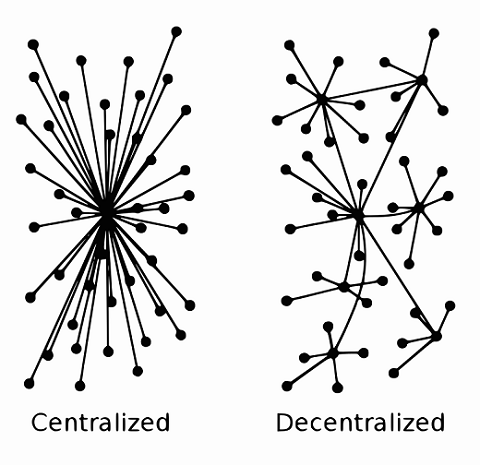
Decentralization


“Wait, why is centralized government a bad thing?” my friend asked me.

I was a little shocked by the question. Especially since we had been through many of the same leadership courses, so I expected him to know the answer. I can't remember how I responded, but the fact is that centralized power is micro-managing. That is why decentralization and delegation are essential to leadership, especially in government.

The Danger

Think about what your job would be like if you had to get your bosses approval for every decision you made. Your place of business would collapse if it operated like that. The same goes for the whole economy. The more regulation and micro-managing we get from our leaders, the more the economy will slow down, until it collapses on itself.

The Rule

“Every problem should be handled by the smallest level of government possible.” This is the principle that my mentor taught me four years ago. Last night, I got to visit him and talk about politics (our favorite topic). Sure enough this principle came up again, and we spent a good amount of time talking about it.

In today's political arena, it seems that the exact opposite happens. When someone has a problem, too often they want the federal government to fix it. However, there are more immediate institutions that can solve the problem. Even private institutions. This wastes time and resources for the federal government, and cheapens the smaller levels of government.

What are the levels?

The Tenth Amendment states “The powers not delegated to the United States by the Constitution, nor prohibited by it to the States, are reserved to the States respectively, or to the people.”

So right here we are looking at three levels of government. First there is the federal government, which is established by the Constitution. Second is the state government. Finally there is the people. There are many other levels not mentioned here, like county and town governments, but the people have the greatest degree of power. Each individual is a sovereign entity, responsible for himself and his possessions.

Some individuals are part of a family unit. While the family isn't an official level of government, it is nonetheless an essential component of civilization. Families and individuals ban together to form towns/communities, which ought to be the strongest form of official government. The farther up the levels of government you go, the weaker and less involved they should be.

Our nation used to operate like this. So much so, that the federal government wasn't even thought about by most people. Instead, today we need to spend a lot of time and energy on federal politics, because all the power is concentrated there.

Solving a Problem


When you have a problem, the first level of government that you ought to turn to is yourself. Can you solve the problem yourself? Self-sufficiency is important for both a free society and for personal growth. If you cannot solve the problem yourself, turn to your family, or some similar small support group. If your family cannot solve the problem, then move to your local government, and from there you can move up the levels of government if necessary. 

Decentralizing helps you to keep as much freedom as possible, and prevents higher levels of government from being over-burdened with too many responsibilities.

Wednesday, August 31, 2016

6 Essentials of Conservative-liberalism

There are six concepts that I feel are essential to conservatism. These aren't just “my six conservative principles”, instead these are the six principles that I propose are essential to conservatism. I have written them in a way that builds one on top of the other. Let me know if you can see how they are all connected.


Individualism is the idea that all humans are equal. We are equal in essence, and therefore equal in rights, and therefore equal before the law. We are all one people, not to be divided by religion, political party, ethnicity, gender, or any such thing. Yet, each of us is a unique individual. We each have similarities and differences that we can find with each human being on Earth.


Negative rights are rights that only require inaction on the part of others. Your right to life, requires that others NOT kill you. Your right to free speech requires that others NOT stop you from talking (although you can't force them to listen, either). Negative rights boils down to your right to be left alone. This is in stark contrast with positive rights, which are entitlements to free stuff. Negative rights must be protected in order to maintain civilization, and those who violate negative rights must be punished (usually by having their rights proportionally violated).


When we protect everyone's negative rights, we create a society with the purest form of liberty, but in order to maintain this pure liberty, we must have virtue, which can be defined as moral excellence. Someone who pursues moral excellence (virtue) can be expected to give liberty to his fellow-man. In fact liberty can be considered the most basic form of virtue.

He can also be expected to pursue the highest good for himself and others. He will seek mutually-beneficial trades, that will lift up both himself and his fellow-man. He will give to the poor, without government coercion. He will stay away from substances and activities which harm himself and those around him.

A perfectly moral population would need no government, but no one is perfectly moral. However, the more moral a population, the smaller government that they will require. This concept is the often unspoken core of conservatism. If we want greater liberty, we need to promote the highest virtue, in the greatest number of people. Virtue cannot be brought by force, from the top down, except for severely punishing those who violate negative rights. Instead virtue must be taught from the ground up.


The government is an institution, set up by the people, to protect the negative rights of their citizens. The job of the government is to recognize different rights, create laws to protect those rights, and punish those who break the law. In America, we have a contract with our government called the Constitution. Our government promises to protect certain negative rights, and we promise not to overthrow them. At least that's supposed to be the idea.


Our Constitution limits the government's power, and the Tenth Amendment delegates all other powers, not mentioned, to the states or to the people. This protects us from centralizing power, which leads to more micro-managing from bureaucrats in the capitol. An effective government delegates power as much as possible. The federal government delegates power to the states, states to counties, cities, and towns, and from there to private institutions, families, and individuals.


Free enterprise is based off of two negative rights: your right to your own property and your right to control how you use your property. When these rights are truly carried out, we create a free enterprise, and wealth is generated. Not money, but wealth. Wealth is generated primarily when there is a mutually-beneficial exchange. When both parties in a trade win, they walk away wealthier than they were before. This doesn't eliminate poverty, as we can never eliminate poverty. However, it can alleviate the severity of poverty.

So What Do You Think?

Please share this post if you liked it. Also, tell me what you think. Tweet at me @frank_perseo or comment on the Frank Talks Facebook page. Did I miss any essential concepts in conservatism? Do you disagree with any of the ones I presented? If so, please tell me why. I am curious to know.

Wednesday, August 3, 2016

Am I a Libertarian?

Well, that depends on how you define "libertarian". I can already hear the collective groan among my audience. Especially those who know me personally, and my propensity to be a word-nerd. Nonetheless, it truly does depend on how you define the word. I want to give some of my thoughts on libertarianism.

On this blog, I have defended the philosophy of conservatism. I like what conservative icon Ronald Reagan said of libertarianism "I believe the very heart and soul of conservatism is libertarianism". The cental concept of libertarianism is liberty: hence the name. Liberty is the freedom to do what you want, so long as you don't infringe on the rights of others. I love liberty, and I believe that we need to conserve certain principles in order to maintain our liberty.

Libertarians are a broad and diverse group. They have a wide array of views on different issues, because they believe in freedom of thought. Because of their diversity, it is so difficult to find a group on unifying beliefs among them. Should abortion be legal? Should we have a police force? What about a justice system? What about a military? Should we have our own party, or should we join with the two major parties? I was inspired to write this blog by this video, which talks about 6 different kinds of libertarians.

Personally, I simplify them down to two categories: modern and classical libertarians. I do this for simplicity's sake, and it helps me to better determine if a self-proclaimed libertarian is an ally. For me there are two factors which separate the two groups. Firstly, do you believe that there is a legitimate function of the institution of government? Second, do you believe that personal virtue is important among citizens to maintain liberty?

If you answer yes to both questions, I would classify you as more of a classical libertarian, and an ally. If you answer no to both question, you are a mordern libertarian, and we have some serious disagreements. (This does not necessarily mean that we can't be allies.)

Our founders are what I would consider classical libertarians. They believed that in order to maintain liberty, you need an appointed institution to dispense justice. Many of them were Christians, and believed that this institution was ordained by God, but could be kept in check by people.

They wrote the Constitution as a contract to limit the government, thereby maximizing the freedom of the citizens. Your freedom only ceases at the rights of others. Personally, I think that the idea of this contract is that if they keep up their end of the bargain, we the people will keep our end. If they break the contract, then we should rise up and replace them.

Our founders also believed in personal virtue, and self-sacrifice. Sometimes we give up the things that we want right now, in order to better ourselves and the community. Self-interest is fine, but self-sacrifice is also noble. It brings about human flourishing (the pursuit of happiness). Virtue is about caring for others. Why would you care whether or not you violate someone else's rights, if you don't care about them? Or if you don't fear the consequences. If everyone was virtuous, if they cared about their fellow-man, we wouldn't need to worry about them violating each other's rights.

It is in the best interest of liberty, and small government, to more people who are as virtuous as possible.

In Summary

Libertarians are those who believe in liberty. Some believe that this is best acheived by throwing off all government, and no longer imposing any standard of virtue. I believe that teaching citizens to be as virtuous as possible* and by maintaining and small and limited government, we can have the purest form of liberty anywhere in the world.

This limited government is given to us in the Constitution. We must maintain a conservative interpretation of the government, to keep those in power from overstepping their bounds. This is why I am a conservative, and I believe conservatism is best for libertarianism.


“If you analyze it I believe the very heart and soul of conservatism is libertarianism. I think conservatism is really a misnomer just as liberalism is a misnomer for the liberals — if we were back in the days of the Revolution, so-called conservatives today would be the Liberals and the liberals would be the Tories. The basis of conservatism is a desire for less government interference or less centralized authority or more individual freedom and this is a pretty general description also of what libertarianism is.”― Ronald Reagan


*Personally I advocate Christianity and Christian ethics as the most virtuous way to live.

Wednesday, April 6, 2016

Who Should You Vote For?

How do you determine who to vote for? Some people wouldn't dare to tell you who to vote for, but if you're reading this, I'm assuming that you are looking for a set of criteria to determine which candidate to pick. This set of criteria works for any elected office, in federal, state or local politics. I am arguing that these criteria are in the best interest of any person from any political position.

Here are the two criteria, you want someone who:
  1. Will abide by and enforce the Laws
    and
  2. Will represent the people

You see, we live in a nation of laws, and a nation of, by, and for the people.

The Law
Any candidate, for any office, must be someone who agrees to abide by and enforce the laws. At the federal level, this would be the US Constitution. At the state level, it would be the state's constitution, and at the local level, it would be the local laws. "What if the laws are unjust?" you may ask. Well, there is a system to change that, and we will get to this in the next point, but you want to work within the system.

If you have a candidate who is willing to break some rules to push an agenda, then you have a deal-breaker. You may even agree with their agenda, but think of it this way: you wouldn't want someone to break the rules to push an agenda that you disagree with. Remember, it goes both ways. What goes around comes around.

The Constitution prevents government officials from infringing on your rights. Among such rights are life, liberty, property, free speech, free religious exercise (meaning the ability to believe what you want and do what you want, without infringing on the aforementioned rights of others). These rights are basic, because they don't cost anything to recognize.

Bottom line: you want a candidate who will agree to be bound to the Constitutional restrictions. It is in everyone's best interest to elect a candidate who will not be his or her own arbiter of what rules to follow.

The Representative
We do not live in a pure democracy. Instead, we live in a Constitutional-Republic, where leaders rule by consent of the governed. In a pure democracy, there is simply a majority rule. Majority rule sounds nice, but then it sucks when you happen to be in a minority. Ideally, we want our leaders to represent all of their constituents, not just those in their party.

Our leaders need to represent both the majority and the minority. If they only represent the majority which voted them in, we will have a country which neglects (or worse) oppresses those in minority groups. Our representatives should promote greater liberty, while at the same time protecting all citizens from having their rights infringed.

You can also vote for a candidate who will work within the system (not infringing on the rights of others) to bring about a change that is necessary in our society. The best example of this would be Lincoln, who represented the abolitionist movement. The newly formed Republican party believed that slavery went against the philosophy of America, and were taking political action to end it.


Lincoln is the best example of this, because he made the change within the Constitutional perimeters.

*****
So there you have it. Two simple criteria. They must follow the Constitution, acting within it's perimeters; and they must represent all their constituents, not infringing on the Constitutional rights of any to push an agenda.

So, tell me what you think. Tweet at me @frank_perseo or comment on the Frank Talks Facebook page. Do you agree or disagree with these criteria? What would be your criteria for picking candidates? And based on this, who do you think that I support?

Wednesday, March 23, 2016

6 Conservative Principles

(Or the six principles which conservatives seek to conserve)

I want to continue with a theme that I started with at the beginning of the year: what does it mean to be a conservative. Now even among conservatives, there are many definitions for conservatism, but the the broadest definition that I can come up is that conservatism* is about conserving the ideas and principles which preserve our liberty. Conservatism is not about maintaining outdated traditions or some status quo.


*This is conservatism in American politics.


What are these principles which preserve our liberty? Well, I want to take a look at that. I have come up with at least 6 principles which conservatives seek to maintain.


  1. Truth- conservatives unique attitude towards the Truth, and the method for finding it.
  2. Natural Law- the system of ethics that our legal system is founded on.
  3. Human rights- part of Natural Law, we believe that all humans are born with certain rights
  4. Liberty- the purest form of freedom
  5. Justice- we cannot maintain liberty without justice
  6. Checks and balances- Our country has an intricate system of checks and balances that must be maintained.


Now most people who identify as conservatives are pragmatists. That is to say, they believe (at least some if not all) conservative policies work to create a society with greater liberty and prosperity for all. However, historically, and today in a growing movement, conservatism is becoming more and more about following a conservative interpretation of the Constitution.


Truth
Ok, everyone is going to make the claim that their position in the truth. I am of, course doing no different here. However, even beyond that, conservatives have an entirely different view of the truth. I would argue that conservatives and progressives have an entirely different ways of dealing with unpleasant ideas.


Conservatives generally have a pragmatic view of truth. That is to say that they seek what works best to create liberty and prosperity.


Natural law
Conservatives hold that morality is not relative. We also hold that there are some ethical laws, which are universally applicable, no matter what religion or culture you come from. We believe that certain moral truths are self-evident, and can be known intuitively. Whether you believe that it comes from a God-given conscience, or from your sub-conscious (System 1 thinking). The people can then elect representatives to pass legislation, to reflect the conscience of the people.


Human rights
In political philosophy, there are two theories on the meaning of rights: positive rights and negative rights. They are misnamed in my opinion, because negative rights are not a negative thing. Positive rights means that the government (and by extension society) must give you something, like free healthcare or education. Negative rights means that the government (and society) will not prevent you from doing something, like speaking freely.


I will dive into this more in a future post, but conservatives take the negative rights approach. Why? Because negative rights do not harm anyone, and they don't cost anyone time or money. It shouldn't cost anything to be a decent person. If you want to help someone out, you are free to do that, but no one should force you to do so. That would take away the joy of helping: doing it willingly.


Conservatives recognize many of these negative rights. Among them are the rights to life, liberty, and the pursuit of happiness. That "pursuit of happiness" is an old-fashioned term, I like to redefine it as the pursuit of anything material or immaterial that leads to human flourishing. If you want to make money, you are free to do that. If you want to spend money on health care or education, you are free to do that. If you want to give money to charities so that the less fortunate can afford things, awesome!


Liberty
Liberty is not the freedom to do whatever you want. Did your parents ever tell you that? It's true. First off, you do not have the freedom to trample on some else's rights. If you do that, then we no longer have freedom for everyone, but instead tyranny from the strongest. So we all must agree not to infringe on the rights of others.


Second, on a personal level, you should use your liberty to do good instead of evil. The government cannot make you a moral person. It can only pass laws and try to enforce them. However, if you personally are using your freedom to do things that are less-than-good you are wasting your freedom. Also, if you are using your freedom to do something that is addictive or dangerous, you risk throwing away your life or your liberty. Now, liberty is about letting people make their own choices, but I will always promote liberty coupled with personal responsibility.


Justice
You cannot have liberty and a civil society without justice. Without justice, there is no repercussions for those who trample on the rights of others. Without laws and a system to enforce them, criminals will simply bully the week. Conservatives believe that the role of mediating and dispensing justice belongs to the government (at least when individuals can't resolve it peacefully).


This is one of the main differences between conservatives and those like "liberal-tarian", voluntarians, and anarchists. Those ideologies tend to believe that government is inherently immoral, because it uses force. Conservatives understand that we need the institution of government to protect the rights of the weak from those who would trample them by force.


Checks and balances
Conservatives believe in a system of checks and balances. Our Constitution sets up such a system between different entities, namely the three branches of government. While the Constitution does not say the words "separation of church and state" (go ahead, look it up), it does guarantee that "Congress shall make no law respecting an establishment of religion,".


Now before you get too excited, the sentence finishes out "or prohibiting the free exercise thereof". Now I am talking about religion in the broadest sense: any philosophical and ethical system and practices. You have the right to exercise your beliefs, so long as you don't infringe on the rights of others. You also have the right to exercise, by using your moral code as a guide in your voting.


We believe in the tenth amendment that delegates all other powers to the states and to the people, rather than having a federal government which micromanages everything. However, during the 1800s, conservative Republican Party was founded to abolish slavery, because we believed that states rights do not trump human rights.


Finally, we have a democratic-republic rather than a pure democracy. This is an important distinction to make, conservatives don't believe in a simple "majority-rule". Why not? Because if we have majority-rule, then it sucks to be in the minority. This leads to the sort of mob-rule which allowed for slavery, segregation, and Nazism. Just because the majority says something doesn't make it right. Do you remember your parents asking you "if all your friends jumped off a cliff, would you go too?"

These are my 6 principles, which define conservatism. Different people may define it different ways, but I am arguing that these are the ones which are essential to conservatism. What do you think? Does this change how you see conservatives?

Tuesday, January 26, 2016

An Open Letter to Dave Rubin


Dear Dave Rubin,


First, I wanted to let you know that I enjoy your show. I think the thing I love the most is how you promote civil discourse, even among those you disagree with: which is one of the most important virtues in life. I disagree with you on many things as a Christian, evangelical, conservative. However, I am always glad to see those I disagree with being open to conversation.


I am writing this open letter as a response to one of your videos with Larry Elder, particularly the part where you talk about the definition of "conservative". I dissent to the definition that you gave, as well as the one that I heard Larry give. In your video you define conservatism "... to resist sudden change... and adherence to traditional values". I couldn't disagree more with this definition. Remember, dictionaries don't tell us how we ought to use certain words, but rather how society already uses them.


Even when I was 19, I was already registered as a Republican, but I was averse to identifying as a "conservative" because of this definition. It wasn't until a mentor of mine provided me with a new definition that I started to identify as a conservative. I think many people my age may be averse to identifying as a "conservative" because they equate the word to a traditionalist. I am not a traditionalist, nor do I "resist sudden change". There are plenty of changes I (and my conservative friends) would love to see happen overnight. Simultaneously, conservatives and liberals each have changes that they would not like to see.


For anyone reading this, I'd like to give my personal definition of conservatism. I would like to present a definition that could appeal not just to evangelicals, but also to the young, atheists, and libertarians. Also, conservatives are not libertarians, as Larry Elder stated. (And we are not all old stuffy white men in the one-percent, either.) There may be some overlap between conservative and libertarian philosophies and goals, but they are different.


This definition of conservatism is my own, and it comes in three parts. These are not three isolated parts, but they build each on top of the other. From the top down they are: conservative (strict) interpretation of the Constitution, pragmatism, and Natural law.


1. Conservative Constitutionalist- I cannot, in a blog post, go into all the intricacies of what this means and why it's important. America has changed a great deal over the years, but we believe that one of the things that makes America great is its Constitution. A government formed by "We the people", as the preamble says, and a nation ruled primarily by written laws rather than by the whim of leaders. Under the US Constitution, and other state and local laws, leaders are supposed to be limited by the law, just like regular people. In fact, maybe even more so than regular people.


That's just one reason why we believe in interpreting it strictly (conservatively), rather than letting leaders bend the laws to fit their agenda. We believe that everyone should follow the laws, or there is no purpose in having the laws anyway. Also, myself and many other conservatives and libertarians would agree, it is better to have just a few basic laws. Fewer laws, and more effective laws, is always better than having thousands of more laws than anyone will ever know or follow. Again, what is the point in a law if no one follows it, or even knows about it?


As a side note, interpreting the Constitution Conservatively means we take into account what the founding fathers meant by what is written therein. We can look at things like other writings of the founders, including the Declaration of Independence, the Federalist papers, works of individual founders, and what certain words meant back then; and these things give us a better understanding of what the founders were saying. Now you can argue that the Founding Fathers couldn't imagine the complexities of today's world, but I would say the principles of human nature and political science don't change.


2. Pragmatism- this is is the definition that my mentor gave me for conservatism. "Conservatives are for what WORKS!" he quipped. And we are arguing that progressivism, communism, fascism, and all other collectivist systems do not work to create happy and prosperous societies. Neither do far-right philosophies like anarchy. We are not against change, instead we want to implement changes that have been tested and proven to work. Try it on a small scale, before enforcing it on the whole country.
We try to resist the human urge to be idealists, and fight for some utopia, because we understand that nothing is perfect. Instead, we simply labor to just make society better. Dennis Prager outlines it this way: liberals ask "does it feel good", conservatives ask "does it do good".
So we are very pragmatic, at least to a certain degree. However, anyone who has ever taken philosophy 101 can show you the problem with pragmatic philosophy. You can always argue that something works, because it meets a given set of goals, but the question remains is that thing right? Is it true? So we must delve deeper into ethics.


3. Natural law- Natural law comes from JudeoChristian theology, but you don't have to be religious to believe it. It is a code of ethics that transcends religion and culture. It says that morality and ethics can be clearly seen, and known intuitively, through the conscience. This is not some mystical mumbo-jumbo, but refers to the fact (studies in moral psychology have shown this) that the emotional, subconscious part of our brain is responsible for making moral judgments.
I also believe that our understanding of natural law is progressive, as individuals and as a society. For instance, through most of human history slavery was an acceptable practice. Then individuals began to become convicted that it was wrong, and they banded together to get written laws passed to reflect the Natural Law.
America is founded on Natural Law, as reflected in the Declaration of Independence "We hold these truths to be self-evident, that all men are created equal, that they are endowed by their Creator with certain unalienable Rights, that among these are Life, Liberty and the pursuit of Happiness." Let's note a few things: first off these truths are self-evident (just like Natural Law). Second, these rights are not granted by the government. They are innate, and our government only agrees not to infringe upon them. This is what's so revolutionary about America. All other countries before that taught that God gave power to kings to grant rights (commodities) to citizens. In American philosophy, God grants rights to the people, and then tells government to protect those rights. Now since you are an atheist, you could say that nature granted these, but you cannot deny that these rights are inherent.

Finally, Natural Law is not determined by popularity. Slavery was always wrong, even when it was accepted by the majority. Racism and prejudice have always been wrong, even when they were socially acceptable and popular.


So conservatives are basically the defenders of natural law. Therefore, we believe in a transcendent ethical system. We tend to be more pragmatic and less idealistic (in a Utopian way). Because of these things, we fight for smaller government and for Constitutional limitations.


I am not sure of all of my positions on all of the issues, but this would be my definition for conservatism. I would love to come on your show and talk about this definition more in depth, and talk more about Natural Law. I hope your show continues to gain traction, and this idea of civil discourse continues to spread.

Sincerely,
Frank Perseo
(@frank_perseo)